Permian Basin truck insurance for Texas and New Mexico
Permian Basin truck insurance has to account for a state line that runs right through the oilfield. A water truck hauling for hire from Pecos into Lea or Eddy County, New Mexico becomes an interstate carrier the moment it crosses, with federal filings to match.
- Licensed
- Texas insurance agency
- Filings
- Form E, BMC-91X, MCS-90
- Writes
- 1 truck to 50-unit fleets
- Office
- Dallas, TX
Permian Basin trucking at a glance
- I-20
- US-285
- SH-302
- SH-18
- SH-349
- Frac sand
- Produced water
- Crude
- Pipe and chemicals
- Spills
- Fatigue
- Wildlife
- Loose livestock
Hauling for hire into Lea and Eddy counties
A truck that runs only between Texas points can operate under TxDMV intrastate authority, with the insurer filing Form E. Once you haul for hire into New Mexico, you need an MC number, a BMC-91 or BMC-91X filing, a BOC-3, and UCR registration each year.
Interstate policies also carry the MCS-90 endorsement. It guarantees payment to the public up to the federal minimum even when the policy would not otherwise pay, and the carrier must reimburse the insurer for those claims.
The federal minimum for general freight is $750,000. Crude and other oil listed in the hazmat table move up to $1,000,000, the same figure TxDMV sets for placarded oil and petroleum on intrastate runs.
Sand trucks from the Kermit and Monahans dunes
Frac sand used to arrive by rail from the Upper Midwest. Now much of it comes from mines in the sand hills around Kermit and Monahans, which shortened hauls and put pneumatic and belly-dump trailers on SH-302, SH-18, and county roads in large numbers. Short hauls mean more trips, more loading cycles, and more time on two-lane roads full of other sand trucks.
New sand carriers pay more until they show a track record, and fewer insurers write brand-new oilfield authorities. Two or more years of CDL experience, clean MVRs, and a written safety program open more doors. Physical damage on sand trailers and tractors should match what the units are worth.
Produced water, spills, and the US-285 corridor
Fresh water moves to frac jobs and produced water moves from wells to disposal sites, much of it by vacuum and tank truck even as pipelines take over part of the load. A lot of it rides US-285 between Pecos, Orla, and the New Mexico line, the road local drivers nicknamed death highway.
Crude moves by truck from wells to gathering points and pipeline stations before the pipe takes over, and those placarded loads carry the $1,000,000 floor on both sides of the line.
Spills are the gap to check. Many auto policies limit pollution coverage to what leaks from the truck's own fuel tank, or cover cleanup only in narrow cases. Water, crude, and chemical haulers often need a pollution endorsement or a separate policy, and operator contracts may spell out which.
Night shifts on unlit caliche lease roads
Rigs and frac crews work around the clock, so plenty of Permian hauling happens after dark on caliche lease roads with washboard ruts and no lighting. Fatigue builds over long shifts, and deer, feral hogs, and loose livestock cross at dawn and dusk. Underwriters build that into oilfield classes, and garaging ZIP, radius, stated values, and commodity do the rest.
Fleets here grow and shrink with oil prices. A carrier may run three trucks in a slow year and fifteen when rigs return, and some policies add and drop units more easily than others. Tell the agent how your count changes.
Operators often require workers' compensation from haulers even though Texas makes it optional for most employers.
US-285, SH-302, and SH-18 through the Delaware Basin
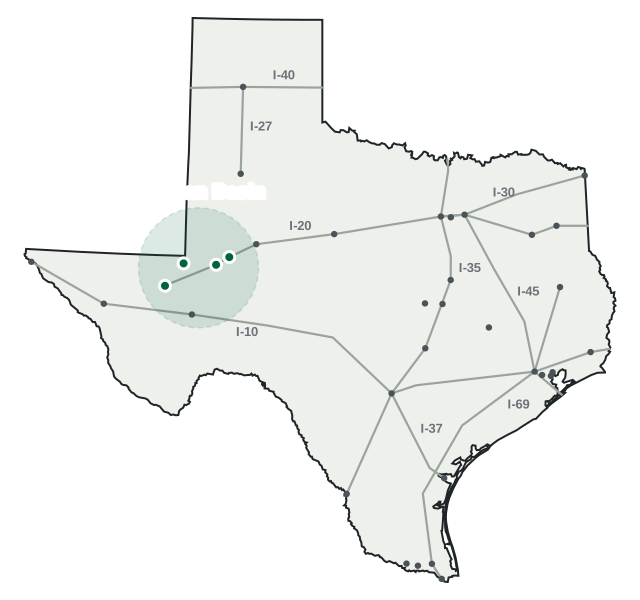
I-20 is the main east-west route through the basin, running through Big Spring, Midland, Odessa, Monahans, and Pecos before joining I-10 east of Van Horn. Most Permian hauling, though, happens on the state and U.S. highways that branch off it, plus thousands of miles of county and lease roads.
US-285 runs northwest from Fort Stockton through Pecos and Orla to Carlsbad, New Mexico, crossing the heart of the Delaware Basin. Heavy truck traffic on a road built for light rural use earned it the nickname death highway among local drivers, and TxDOT has spent years widening and adding passing lanes. SH-302 connects Odessa with Kermit and Mentone, carrying sand and water trucks through Winkler and Loving counties.
SH-18 runs from Fort Stockton through Monahans and Kermit to the New Mexico line toward Jal. SH-349 and SH-158 serve the Midland Basin side.
The freight is mostly oilfield. Frac sand now comes largely from mines in the Kermit and Monahans sand hills, which shortened hauls compared with the days of railing sand in from the Upper Midwest. Fresh water moves to frac jobs and produced water moves to disposal wells.
Pipelines have taken over part of that work, but trucks still carry plenty. Crude moves by truck from wells to gathering points and pipeline stations. Pipe, chemicals, rig components, and crew housing fill out the loads.
Activity rises and falls with oil prices, and so does hauling. When rigs come back, new carriers and new drivers enter fast, and roads crowd up.
When prices drop, fleets park trucks. Insurance that can add or remove units without starting over is worth asking about.
Conditions are classic West Texas. Spring winds lift dust and sand across highways and lease roads. Hail storms hit hard in spring and early summer.
Summer heat regularly passes 100 degrees. Winter brings a few hard freezes, and the February 2021 freeze showed how fast ice can shut down roads and production across the basin. Wildlife and loose livestock round out the hazards on unlit two-lane roads at night.
Questions truckers ask
Do I need federal authority if I only cross into New Mexico now and then?
If you haul for hire and any load crosses the state line, that trip is interstate commerce. You need an MC number, a federal insurance filing, a BOC-3, and UCR registration, plus at least $750,000 in liability for general freight. Trucks that never leave Texas can run under TxDMV intrastate authority instead. The agent can help you set up the right filings.
Can my policy grow when the rigs come back?
Ask before you need it. When activity picks up, basin carriers can jump from three trucks to fifteen, and some policies add units and drivers by endorsement more easily than others. When prices drop and trucks park, the same question runs in reverse. Tell the agent how your count swings so the quote goes to carriers that handle mid-term changes without starting over.
How do new Permian carriers get insured?
Start with your USDOT number and the authority your work needs, then request a quote before you start hauling. Fewer carriers write new oilfield authorities, and pricing is higher at first. Experienced drivers, accurate unit values, and a written safety program help. Once you have a clean year or two of loss runs, more options usually open up at renewal.
More coverage for Permian Basin trucks
Nearby areas
Get your trucks quoted
Call and talk it through, or send the short form and an agent calls you back.