DFW truck insurance across the metroplex
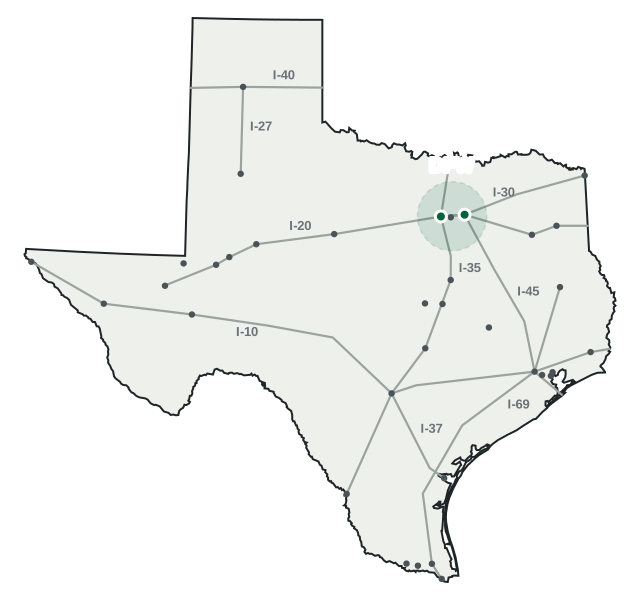
DFW truck insurance gets rated one unit at a time, even when your trucks touch five or six counties before lunch. That matters in a metroplex where I-35 splits at Denton into I-35E through Dallas and I-35W through Fort Worth, then rejoins at Hillsboro.
- Licensed
- Texas insurance agency
- Filings
- Form E, BMC-91X, MCS-90
- Writes
- 1 truck to 50-unit fleets
- Office
- Dallas, TX
DFW trucking at a glance
- I-35E
- I-35W
- I-20
- I-30
- AllianceTexas
- Container drayage
- Auto and aerospace parts
- Air cargo
- Food and beverage
- Hail
- Trailer theft
- Cargo theft
- Ice storms
Garaging ZIPs from Frisco to Mansfield
A metroplex fleet rarely sleeps in one place. A day cab might park in Lancaster, a sleeper in Fort Worth, and a straight truck in McKinney. Insurers rate each unit by the ZIP where it is garaged most nights, so those three trucks can carry three different rates on the same policy.
Give the agent the real overnight address for every unit. Listing the office address for convenience can cause trouble at claim time if it does not match where the truck actually sleeps.
Radius and type of work sit on top of the ZIP. Dump trucks following projects from Frisco to Mansfield are priced differently than box trucks running McKinney to Burleson, and both differ from a sleeper heading to Oklahoma City or Shreveport.
Hail is the wild card across all of them, since one spring storm can damage dozens of trucks in a single yard. Theft of trailers, catalytic converters, and cargo also varies by area, which is one more reason the address on each unit has to be right.
Rail ramps at both ends: Wilmer and Alliance
The metroplex has two intermodal anchors. Union Pacific runs its terminal in Wilmer inside the Southern Dallas County Inland Port, and BNSF runs the Alliance intermodal facility on the north side of Fort Worth. Drayage carriers often work both, plus the warehouse traffic around DFW Airport and Centreport in between.
Pulling someone else's container or trailer puts you under an interchange agreement, and the equipment owner will usually want trailer interchange coverage on their gear while it is in your care. The agreement sets the limit, so include it with your quote request. Cargo is often set at $100,000, though electronics and other high-value loads can call for more.
General liability helps when your drivers work loading docks and job sites. The General Motors plant in Arlington and the aerospace plants in Fort Worth and Grand Prairie add parts loads to the same yards.
Texas-only and interstate loads on one metroplex policy
Plenty of DFW carriers run both kinds of work: a regional load to Oklahoma one day, a Texas-only construction haul the next. That means two sets of filings.
Interstate for-hire work needs an MC number, a BMC-91 or BMC-91X filing, a BOC-3, and UCR registration each year. Texas-only trucks over 26,000 lbs need TxDMV authority with a Form E, and the carrier must keep that filing active at all times.
Mixed equipment is common too: a few day cabs for drayage, a sleeper for regional runs, and a dump truck or mixer serving the suburbs in Collin, Denton, Rockwall, Ellis, and Johnson counties. One policy can hold all of them.
Each unit still gets its own class, so list how every truck is used. That keeps the quote accurate and avoids surprises at audit time.
How freight moves across the DFW metroplex
Interstate 35 splits in two as it passes through the metroplex. North of the region at Denton it divides into I-35E, which runs through Dallas, and I-35W, which runs through Fort Worth.
The two branches rejoin south of the metro at Hillsboro. That split shapes how a lot of north-south freight moves, and both branches are heavily traveled by trucks.
East-west, I-20 runs along the south side of both cities and is a favorite bypass for through traffic. I-30 connects downtown Fort Worth, Arlington, and downtown Dallas before heading toward Texarkana.
I-45 starts in Dallas and runs to Houston. Loops add more layers: I-820 around Fort Worth, I-635 (LBJ Freeway) around the north and east sides of Dallas, and the President George Bush Turnpike and SH-121 across the northern suburbs.
Two big logistics zones anchor the region. On the north side of Fort Worth, AllianceTexas combines the BNSF Alliance intermodal facility, a cargo-focused airport, and a long row of distribution centers along I-35W and SH-170.
On the south side of Dallas County, the Southern Dallas County Inland Port covers Wilmer, Hutchins, and Lancaster, with the Union Pacific intermodal terminal in Wilmer and warehouse after warehouse along I-45 and I-20. DFW International Airport, between the two cities, adds air cargo and the Centreport area adds more warehouse traffic.
Manufacturing adds steady inbound and outbound loads. The General Motors assembly plant in Arlington, aerospace and defense plants in Fort Worth and Grand Prairie, and food and beverage distribution throughout the region keep flatbeds, vans, and reefers busy. Fast suburban growth in Collin, Denton, Rockwall, Ellis, and Johnson counties keeps dump trucks, concrete mixers, and lumber haulers on the road.
Weather across DFW follows the same pattern from city to city. Spring brings hail and severe thunderstorms, and the metro has had several large hail events that hit thousands of vehicles. Tornadoes are possible.
Winter ice storms can close bridges and overpasses quickly, as the February 2021 freeze showed. Summer temperatures well above 100 degrees wear on tires and reefer units.
Questions truckers ask
My trucks park in different DFW cities. How is that rated?
Each unit is usually rated by the ZIP where it is garaged most nights. A tractor parked in Fort Worth and another in Lancaster may carry different rates on the same policy. Give the agent the real overnight location for every unit. Using one address for convenience can create problems at claim time if it does not match where the truck actually sleeps.
Does one hailstorm across the metroplex hit my whole fleet's deductible?
Depending on the policy, a storm that damages five trucks in one yard can mean a deductible on each damaged unit. That is worth thinking about when you pick a deductible for a metroplex fleet. Some owners carry a lower deductible on newer tractors and a higher one on older trailers. Ask the agent how each policy you are quoted handles a multi-unit weather loss.
Can a new authority in DFW get insured?
Yes. New ventures pay more because they have no loss history under their own authority, but some carriers write them. Two or more years of CDL experience and a clean MVR make a big difference. Have your USDOT and MC numbers and any prior driving history in hand so the agent can shop the account to markets that take new metroplex carriers.
More coverage for DFW trucks
Nearby areas
Get your trucks quoted
Call and talk it through, or send the short form and an agent calls you back.