Rio Grande Valley truck insurance
Rio Grande Valley truck insurance has to plan for water first. The Valley's flat ground drains slowly through floodways and resacas, so when a Gulf storm stalls over Cameron and Hidalgo counties, trucks in low yards can take on water fast.
- Licensed
- Texas insurance agency
- Filings
- Form E, BMC-91X, MCS-90
- Writes
- 1 truck to 50-unit fleets
- Office
- Dallas, TX
Rio Grande Valley trucking at a glance
- I-2
- I-69C
- I-69E
- Pharr-Reynosa bridge
- Military Highway
- Citrus
- Onions and melons
- Mexican produce
- Cotton and grain sorghum
- Flooded low yards
- Hurricanes
- Reefer spoilage
- Open lot theft
Rio Red grapefruit, onions, and the packing-shed calendar
Homegrown crops keep Valley reefers and farm trucks on a calendar of their own: citrus from Hidalgo County packing sheds, vegetables and melons in spring, cotton and grain sorghum in summer. Sheds in Mission, Edinburg, and Weslaco run hard in season and go quiet after.
Mexican produce crossing at the Pharr-Reynosa bridge fills the gaps between local harvests, so many Valley reefers run year round while the farm trucks park. That mix of a busy cold chain and seasonal farm work is what makes Valley quotes different from the rest of Texas.
Underwriters want to know how many months each truck actually runs and what it carries. Produce and citrus bring spoilage risk, so reefer age and maintenance records count. Cargo with reefer breakdown coverage is the usual fix, since many cargo forms exclude spoilage from mechanical failure.
Own-crop farm trucks and broker reefers in one Weslaco yard
A farm truck that hauls only your own crop and a reefer that runs produce for brokers need different policies, even when they park side by side. Hauling for hire changes your filings and your rating class. Agricultural trucking coverage fits the farm units and seasonal haulers.
Limits differ by lane. Auto liability runs $500,000 for Texas intrastate trucks over 26,000 lbs and $750,000 for interstate for-hire freight, and most brokers want $1,000,000. If a packer, grower, or broker sets its own insurance terms, put them in front of the agent at the start.
June to November across Cameron, Hidalgo, Willacy, and Starr
Hurricane season is the headline. Physical damage pricing reflects where your trucks are garaged, and low-lying ZIPs near the coast and floodways carry more risk than higher ground farther inland. Some carriers restrict new coverage once a named storm is in the Gulf, so get the policy in place before June.
Flooding is often a bigger problem than wind. Storms that come ashore near Brownsville or farther up the coast can push heavy rain across all four counties, and yards on low ground near resacas and floodways can sit in water for days. Wind and flood damage to your own truck falls under other-than-collision (OTC) physical damage.
Heat sits on top of the storms. Summer temperatures and humidity strain reefer units and tires, and trucks idling in the Pharr and Brownsville bridge lines feel it most.
Garaging from Mission to Harlingen
Valley trucks touch a lot of cities in a day. A reefer may load in Pharr, stop at a packing shed in Weslaco, and head north through Harlingen on I-69E. Garaging ZIP is set by the yard where the truck parks overnight, not by the route, so give the agent each yard's address.
Loaded reefers and tractors in open lots attract thieves. Fenced yards, lighting, and GPS tracking help your case with underwriters. I-2 traffic adds its share, and CDL experience, MVRs, years in business, and loss runs fill in the rest.
Four counties along I-2, I-69C, and I-69E
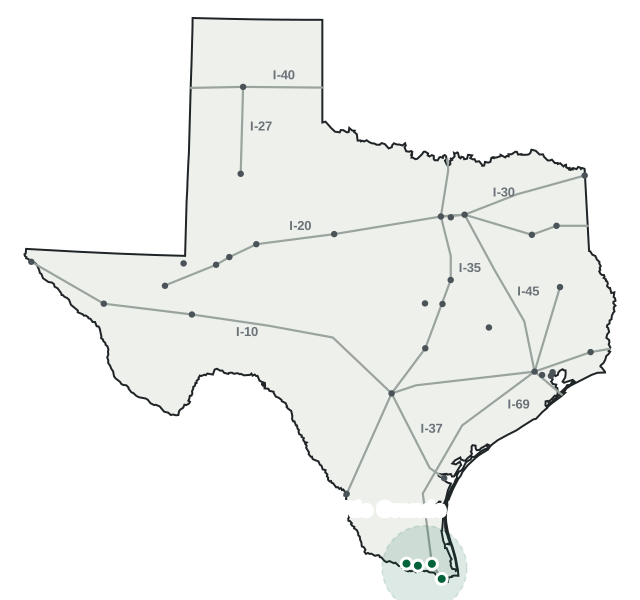
The Rio Grande Valley covers Cameron, Hidalgo, Willacy, and Starr counties at the southern tip of Texas. Its cities line up along the river and I-2: Mission, McAllen, Pharr, San Juan, Alamo, Weslaco, Mercedes, and Harlingen, with Edinburg to the north and Brownsville to the east. I-2 ties them together.
I-69C runs north from Pharr through Edinburg, and I-69E runs north from Brownsville through Harlingen toward Corpus Christi. Business 83 and Military Highway carry local and farm traffic closer to the river.
Agriculture still shapes the freight. Citrus groves, known for Rio Red grapefruit and oranges, ship from packing sheds across Hidalgo County. Onions, cabbage, leafy greens, and melons move in spring.
Cotton and grain sorghum fill trucks in summer. Add produce crossing from Mexico at the Pharr-Reynosa bridge, and the Valley runs a year-round cold chain of reefers, cold storage, and packing houses.
Industry and services add more. Harlingen has Valley International Airport and a mix of distribution and medical freight. Edinburg is home to the University of Texas Rio Grande Valley and a growing retail base.
Construction keeps dump trucks and flatbeds busy across all four counties. The Port of Brownsville and the Port of Harlingen on the Arroyo Colorado handle bulk freight, and the Los Indios and Veterans bridges carry Matamoros maquiladora traffic.
Hurricane season runs June through November, and the Valley sits in the path of Gulf storms. Systems that come ashore near Brownsville or farther up the coast can push heavy rain and wind across all four counties.
Flooding is often the bigger problem, because the flat terrain drains slowly through floodways and resacas. Trucks parked in low yards can take water quickly.
Cold is the rare surprise. Rare hard freezes can damage citrus and close highways, as February 2021 showed. Summer is the opposite problem: heat and humidity strain reefer units, tires, and cooling systems all season, and a reefer idling in a bridge line in August works harder than anywhere else in the state.
Questions truckers ask
What if a storm floods my yard before I add physical damage?
Then the repair is on you. Wind and flood damage to your own trucks falls under the other-than-collision (OTC) part of physical damage, and liability alone will not pay for your units. There is no separate hurricane policy for trucks. Some carriers stop writing new coverage once a named storm threatens the coast, so add it before June and ask what deductible applies to storm losses.
What should a Valley produce hauler carry?
Most start with auto liability at the level their brokers require, often $1,000,000, plus $100,000 in cargo. Reefer breakdown coverage matters most, since many cargo forms exclude spoilage from mechanical failure. Physical damage protects the tractor, trailer, and reefer unit. If any truck crosses into Mexico, buy Mexican liability separately from a Mexican-licensed insurer.
Can a small local fleet in Weslaco use the same quote process?
Yes. The quote request works the same for a two-truck local fleet as for a long-haul carrier. Tell the agent each unit's type, value, and radius, plus your drivers and loss history. Short-radius local work often prices differently from long-haul, and the agent can compare carriers that write small fleets in the Valley.
More coverage for Rio Grande Valley trucks
Nearby areas
Get your trucks quoted
Call and talk it through, or send the short form and an agent calls you back.