Commercial truck insurance in Corpus Christi, TX
Commercial truck insurance in Corpus Christi, TX is bought around hurricane season, since insurers often stop writing new coverage or raising limits once a named storm is in the Gulf. The Port of Corpus Christi, with its huge crude oil export volume, keeps tankers, flatbeds, and grain trucks feeding the docks around the clock.
- Licensed
- Texas insurance agency
- Filings
- Form E, BMC-91X, MCS-90
- Writes
- 1 truck to 50-unit fleets
- Office
- Dallas, TX
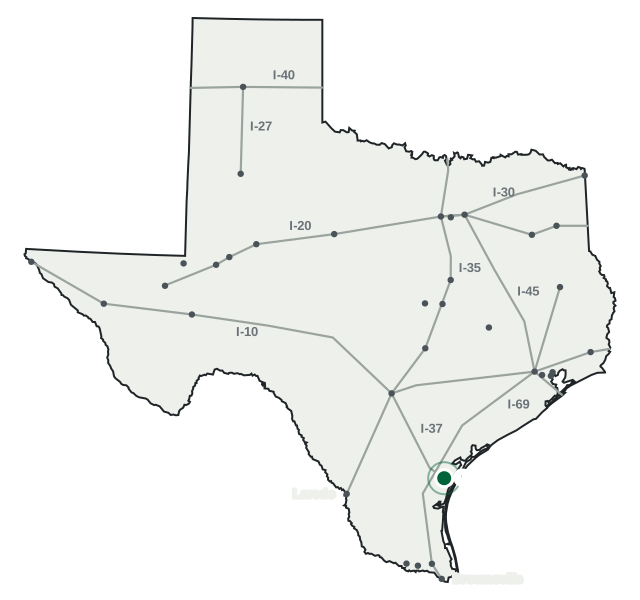
Corpus Christi trucking at a glance
- Port of Corpus Christi
- I-37
- Harbor Bridge
- SH-44
- US-77
- Crude oil
- Refined products
- Grain
- Wind turbine parts
- Hurricanes
- Salt air corrosion
- Flooding
- Deer
Binding before a named storm hits the Coastal Bend
Corpus Christi sits right on the Gulf. Hurricane Celia hit the city directly in 1970, and Hurricane Harvey made landfall near Rockport in 2017 and caused heavy damage across the Coastal Bend. When a storm threatens, many insurers put a temporary hold on new policies and coverage increases until it passes.
Set up physical damage with flood and wind well before the season gets busy. Salt air is the slow version of the same problem. Trucks parked near the water corrode faster, and rust is usually treated as wear and tear, not a covered loss.
Underwriters look at equipment condition, so regular washing and maintenance pay off twice. Tropical storms also bring flooding, so a lot that stays dry in a summer shower may not stay dry in a storm.
Tank and hot shot work along Refinery Row and in Ingleside
Refinery Row runs along the north side of the city near the Inner Harbor and Up River Road. Across Nueces Bay, Portland, Gregory, and Ingleside have added an LNG export terminal and other large plants. Tank trucks, vacuum trucks, flatbeds with pipe and steel, and hot shots serve all of it, and many port facilities require TWIC cards for unescorted access.
Oil and many hazmat loads need $1,000,000 in liability under federal rules, and intrastate placarded oil and petroleum haulers need $1,000,000 with TxDMV. Certain bulk hazmat requires $5,000,000. Refineries and terminals often ask for more, plus pollution liability and workers' comp for anyone working inside the gate.
New authorities hauling crude or hazmat will find fewer markets, so start early. The Harbor Bridge replacement on US-181 has brought years of lane closures and detours between downtown and North Beach, which adds time to plant runs.
I-37 and SH-44 runs out to the Eagle Ford
The Eagle Ford Shale west and northwest of the city supplies much of the crude that reaches the port by pipeline and by truck. Sand, water, and equipment haulers run I-37 toward San Antonio and SH-44 toward Robstown and Alice every day, and some head up US-59.
Next steps for those operators: plan for long empty miles, night driving, and deer, all of which show up in loss history. Oilfield lease roads bring more physical damage claims, and many standard forms exclude certain oilfield operations.
A hot shot driver who runs pipe to Eagle Ford leases one week and delivers to a plant in Ingleside the next should tell the agent about both jobs. Port drayage trucks that pull local warehouse loads when ships are slow should do the same, and so should grain haulers who pick up harvest loads of cotton, sorghum, and corn in the fall.
Port of Corpus Christi, Refinery Row, and the Harbor Bridge
The Port of Corpus Christi is the center of the local freight economy. It handles a huge volume of crude oil exports, along with refined products, grain, and project cargo like wind turbine parts. Tankers, flatbeds, and grain trucks feed the docks around the clock, and many facilities require TWIC cards for unescorted access.
Refinery Row runs along the north side of the city near the Inner Harbor and Up River Road. Several large refineries and chemical plants operate there, and they need a steady flow of tank trucks, flatbeds, vacuum trucks, and hot shots. Across Nueces Bay, the Portland, Gregory, and Ingleside area has seen big industrial growth, including an LNG export terminal and other large plants.
The Harbor Bridge, which carries US-181 over the ship channel between downtown and North Beach, is being replaced by a new, taller bridge. Construction has brought lane closures and detours for years.
Highways connect the port to the rest of Texas. I-37 runs northwest to San Antonio and is the main route for freight and oilfield traffic heading to the Eagle Ford and beyond. US-77, part of the future I-69E, runs south through Kingsville and Harlingen toward Brownsville and the Rio Grande Valley.
US-181 heads north toward Sinton and Beeville. SH-358, known as South Padre Island Drive, is the main east-west route through the city. SH-44 runs west toward Robstown and Alice.
Oil and gas fields lie west and northwest of the city. The Eagle Ford Shale supplies much of the crude that reaches the port by pipeline and by truck. Sand, water, and equipment haulers run between Corpus Christi and the field every day.
Agriculture adds seasonal work. The Coastal Bend grows cotton, grain sorghum, and corn, and harvest season brings grain trucks and module haulers onto rural roads.
Weather is the biggest risk. Hurricane Harvey made landfall near Rockport in 2017 and caused heavy damage in the Coastal Bend. Hurricane Celia in 1970 hit Corpus Christi directly.
Tropical storms bring flooding, and salt air corrodes equipment year round. Summer heat and humidity are hard on tires, reefers, and engines.
Questions truckers ask
Can I buy truck insurance when a hurricane is in the Gulf?
Often not. Many insurers put a temporary hold on new policies and coverage increases when a named storm threatens the Texas coast, and that hold can last until the storm passes. The safe move is to set up your coverage, including physical damage with flood and wind, well before storm season. Do not wait for a forecast cone over the Coastal Bend.
What limits do refineries on Refinery Row require?
Requirements vary by company, but most refineries and terminals expect at least $1,000,000 auto liability, and many ask for more. Pollution liability and workers' comp are common contract requirements. Hazmat haulers must also meet federal or TxDMV minimums based on the material. Send your contract to the agent so the quote meets every requirement.
Does salt air damage affect my physical damage coverage?
Physical damage covers sudden losses like collision, flood, fire, and theft. Gradual damage like rust and corrosion is usually treated as wear and tear and is not covered. Near the bay and the ship channel, regular washing and maintenance matter. Keeping equipment in good shape also helps when an underwriter reviews the condition of your units.
More coverage for Corpus Christi trucks
Nearby areas
Get your trucks quoted
Call and talk it through, or send the short form and an agent calls you back.